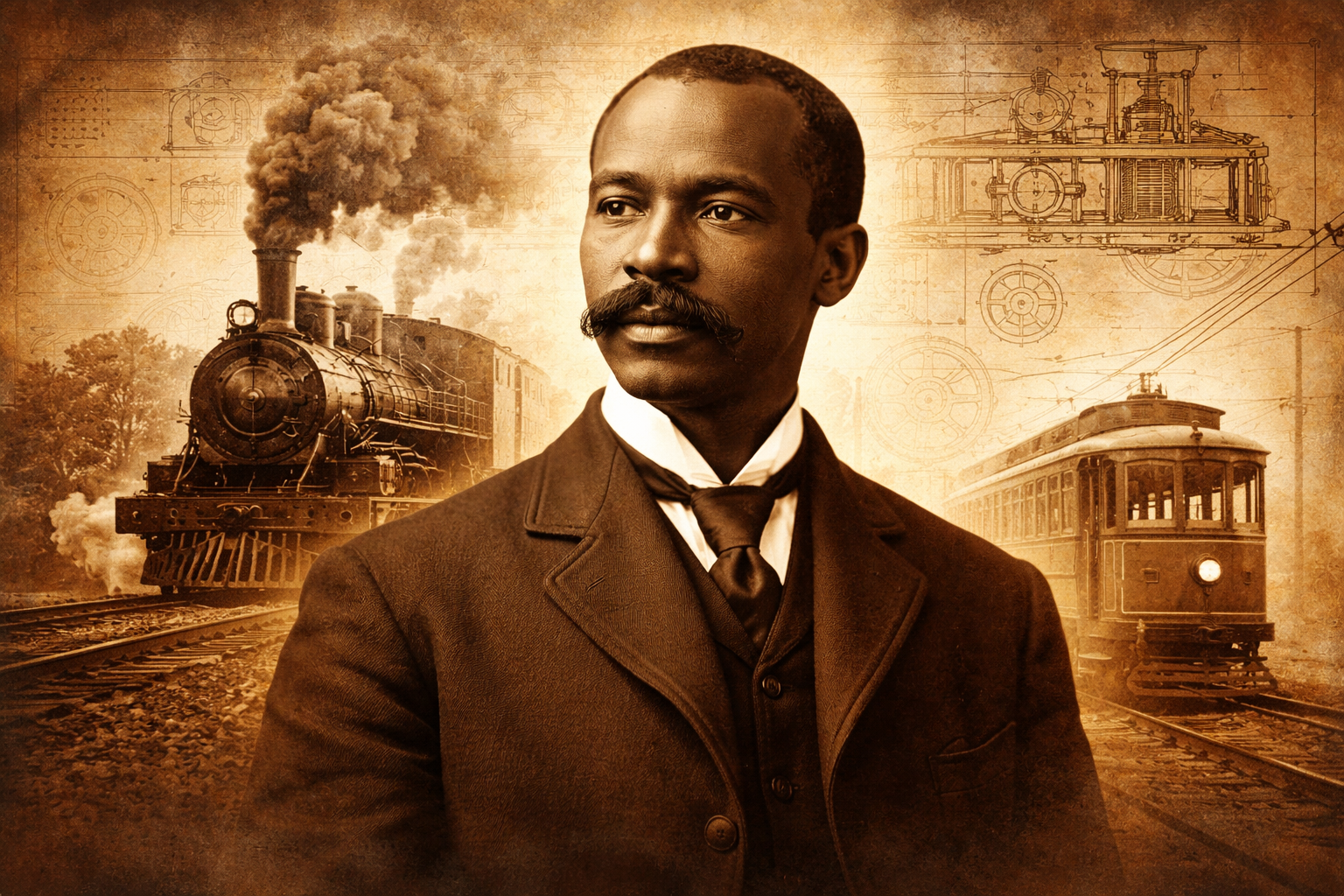
Granville T Woods: The Engineer Who Made Railroads Safer
In the history of modern engineering, some names become symbols of entire industries, while others quietly power the systems we still rely on today. Granville T Woods belongs firmly in the second group. His work helped make electric railways safer, communication systems more reliable, and urban transportation more practical at a time when electricity was still a risky frontier.
This article explores his life, ideas, technical contributions, and long term impact through a people first, historically grounded lens. It is written to satisfy readers who want real understanding, not quick trivia. If you are researching pioneering engineers, studying the roots of transportation technology, or seeking overlooked innovators who shaped daily life, this guide is designed to serve that intent fully.
Who Was Granville T Woods?
Granville T Woods was an American inventor and electrical engineer active during the late nineteenth century. He was born in 1856 and grew up during a period when industrialization was reshaping cities, labor, and communication. Largely self educated, he entered engineering through hands on work rather than formal academic training.
What makes his story exceptional is not only the volume of his inventions, but the practical nature of them. His ideas were designed to solve real operational problems. Train collisions, unreliable signaling, poor communication between moving vehicles and stations, and inefficient power delivery were everyday risks. He focused on making these systems safer and more dependable.
By the end of his career, he had secured dozens of patents and influenced railway and electrical systems across the United States. His work was respected by peers, contested by powerful corporations, and later recognized as foundational to modern transit.
Historical Context: Why His Work Mattered
To understand the importance of his achievements, it helps to understand the world he worked in.
The Electrical Age Was New and Dangerous
During the late 1800s, electricity was not standardized. Voltage levels varied, insulation was inconsistent, and safety practices were still being developed. Railroads were expanding rapidly, but signaling systems were primitive. Train operators often relied on visual cues or fixed schedules rather than real time communication.
Accidents were common. Collisions, derailments, and electrical failures caused injuries and deaths. Cities wanted electric streetcars, but reliable control systems were missing.
This was the environment in which Woods developed solutions that emphasized communication, automation, and safety.
Core Engineering Contributions
The Induction Telegraph
One of his most significant achievements was an induction based telegraph system for moving trains.
Traditional telegraph systems required physical connections through wires. That approach failed for trains because constant contact was impossible. His system allowed messages to be sent between a moving train and a station without direct electrical contact.
Why This Was Revolutionary
- Train operators could receive real time instructions.
- Dispatchers could warn crews about obstacles or schedule changes.
- The risk of collisions was reduced significantly.
- Railway efficiency improved without rebuilding infrastructure.
This innovation directly addressed a life and death problem in transportation. It is often cited as a major step toward modern train signaling and wireless communication concepts.
Electric Railway Improvements
Electric railways were expanding in cities, but they faced challenges related to power delivery and control. Woods developed systems that improved how electricity was transmitted to trains and how motors responded to load changes.
Key benefits of his work included:
- Smoother acceleration and braking.
- Reduced electrical wear on components.
- More reliable streetcar service in urban environments.
These improvements made electric transit more practical for daily commuters and helped cities adopt cleaner transportation alternatives.
Advancements in Telephony and Power Systems
Beyond railroads, he worked on devices related to telephone technology, electrical distribution, and control mechanisms.
Examples of problem solving themes in his patents include:
- Reducing signal interference.
- Improving clarity over long distances.
- Making electrical systems safer for operators.
Rather than inventing novelty gadgets, he focused on systems engineering. He looked at how components worked together and where failures occurred in real use.
Experience Driven Innovation
What sets his work apart is how grounded it was in lived experience.
He spent time observing rail operations, working with mechanical systems, and listening to the needs of operators. His inventions reflect an engineer who understood both theory and practice.
From an engineering perspective, this is a powerful lesson:
- Problems are best solved where they occur.
- Design must account for human error and environmental stress.
- Reliability matters more than elegance in safety critical systems.
This approach aligns strongly with modern engineering ethics and user centered design principles.
Legal Battles and Recognition
Patent Disputes with Major Figures
Several of his patents were challenged by large corporations and well known inventors of the era. In multiple cases, courts upheld his claims, recognizing the originality and technical merit of his work.
These legal victories mattered for two reasons:
- They validated his expertise in a competitive field.
- They protected independent inventors from corporate appropriation.
While popular stories sometimes exaggerate rivalries, historical records show that his ideas stood up under legal and technical scrutiny.
Financial and Professional Challenges
Despite technical success, financial stability was inconsistent. Patent enforcement was expensive, and licensing income was not always reliable. Like many inventors of the era, he faced periods of hardship.
This reality highlights an often ignored truth in innovation history. Technical brilliance does not guarantee economic security. Systems that support inventors matter just as much as ideas themselves.
Real World Impact Still Felt Today
The systems he helped pioneer did not disappear with time. They evolved.
Modern rail signaling, automated control systems, and wireless communication concepts trace part of their lineage to the principles he demonstrated.
Areas Influenced by His Work
- Railway safety and dispatch communication.
- Electric transit infrastructure.
- Electrical system control logic.
- Applied electromagnetic signaling.
Even though technology has advanced dramatically, the core goals remain the same: safety, reliability, and clear communication.
Educational and Cultural Significance
Representation in Engineering History
His story matters beyond technical diagrams and patent numbers. It challenges narrow narratives about who builds technology.
Students studying engineering history benefit from learning about innovators who succeeded through persistence, observation, and applied learning rather than privileged access.
Lessons for Modern Engineers
From a professional standpoint, his career offers several enduring lessons:
- Focus on real problems, not trends.
- Test ideas in practical environments.
- Document and protect your work carefully.
- Expect resistance when challenging established systems.
These principles are as relevant in software engineering and renewable energy as they were in electric railways.
Common Misconceptions
The “Black Edison” Label
He was sometimes referred to by a nickname comparing him to a more famous inventor. While intended as praise, it reduces his identity to a comparison rather than recognizing his independent contributions.
Modern scholarship increasingly avoids this framing, emphasizing his originality and specific impact.
Patent Count Myths
Some sources exaggerate the number of patents attributed to him. Verified records support that he held more than fifty, with many focused on electrical and transportation systems. Exact totals vary depending on classification methods.
When studying historical figures, precision matters more than dramatic numbers.
Why His Work Still Deserves Study
Technology education often focuses on the latest tools, but understanding foundational systems builds better engineers.
Studying his work helps learners:
- See how constraints shape design.
- Appreciate incremental innovation.
- Understand how safety engineering evolves.
For historians, his career offers insight into industrial America, patent law, and the human cost of innovation.
Frequently Asked Questions
What field did Granville T Woods work in?
He primarily worked in electrical engineering, with a strong focus on railway systems, communication technology, and power distribution.
Did he receive formal engineering education?
No formal university degree is documented. He gained expertise through self study and hands on technical work.
What problem did the induction telegraph solve?
It allowed communication between moving trains and stations without physical wire connections, reducing collisions and improving scheduling.
How many patents did he hold?
Historical records confirm more than fifty patents, mainly related to electrical and transportation technologies.
Was his work recognized during his lifetime?
Yes, his inventions were used commercially and upheld in patent disputes, though financial rewards were inconsistent.
Why is his legacy important today?
His approach to safety focused engineering and real world problem solving continues to influence modern transportation and communication systems.
Conclusion
Granville T Woods was not a celebrity inventor chasing attention. He was a systems thinker addressing urgent problems in a rapidly electrifying world. His contributions improved safety, reliability, and efficiency at a time when failure carried serious consequences.
By focusing on practical needs, defending his intellectual work, and continuing despite obstacles, he left a legacy that extends far beyond his lifetime. Understanding his work deepens our understanding of how modern infrastructure came to be and why thoughtful engineering still matters.