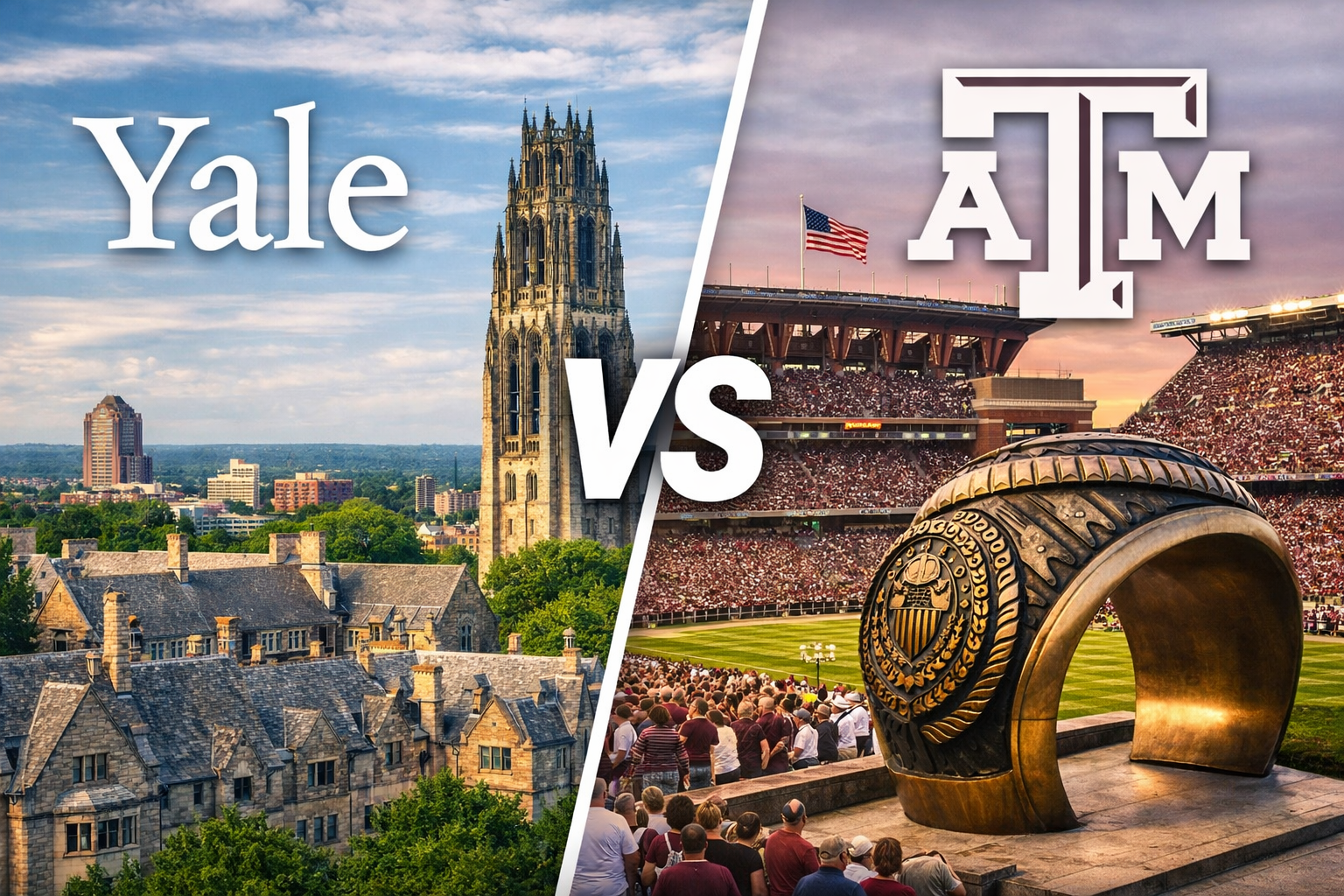
Yale vs Texas A&M: A Deep, Practical Comparison
When people search for yale vs texas a&m, they are usually not looking for a simple winner. They want clarity. These two universities sit on very different ends of the higher education spectrum. One is a private Ivy League institution rooted in centuries of academic tradition. The other is a massive public research university with a strong culture, deep alumni ties, and a focus on applied learning.
I have worked with students who seriously considered both schools, and I have reviewed admissions data, campus outcomes, and academic structures closely over the years. What follows is not hype or rankings talk. It is a grounded, people-first breakdown meant to help you understand how these universities actually compare in real life.
This article is long because the decision is complex. If you are choosing for yourself or advising someone else, you deserve more than surface-level comparisons.
Understanding the Core Difference Between Yale and Texas A&M
Before comparing details, it helps to understand the core identity of each institution.
Yale University is a private research university located in New Haven, Connecticut. It is one of the oldest universities in the United States and a founding member of the Ivy League. Its reputation is built on liberal arts education, elite professional schools, and a strong emphasis on intellectual exploration.
Texas A&M University is a public land-grant institution based in College Station, Texas. It is one of the largest universities in the country by enrollment. The school is known for engineering, agriculture, business, military leadership through the Corps of Cadets, and a tight-knit campus culture.
In short, this comparison is not about better or worse. It is about fit, goals, and learning style.
Academic Philosophy and Teaching Style
Yale’s Academic Approach
Yale’s academic structure is built around depth of thinking, discussion-based learning, and independent research. Class sizes are generally small, especially after introductory courses. Professors are expected to teach, not just research.
Key academic traits include:
- A strong liberal arts foundation
- Emphasis on writing, argument, and critical thinking
- High faculty involvement with undergraduates
- Freedom to explore across disciplines
Students often describe Yale as intellectually intense but flexible. You are encouraged to change majors, combine fields, and follow curiosity rather than a fixed career track.
Texas A&M’s Academic Approach
Texas A&M takes a more structured and application-driven approach. Many programs are designed with industry outcomes in mind, particularly in engineering, agriculture, and applied sciences.
Common characteristics include:
- Larger class sizes, especially early on
- Clear degree pathways and prerequisites
- Strong focus on teamwork and leadership
- Practical, skills-based coursework in many majors
While there is less academic flexibility early in some programs, students who thrive here often value clarity and real-world preparation.
Majors, Programs, and Academic Strengths
Where Yale Excels
Yale is especially strong in:
- Humanities and social sciences
- Law, medicine, and public policy
- Arts, music, and drama
- History, philosophy, and political science
Its residential college system supports interdisciplinary study. Students often double major or pursue joint degrees without extending graduation time.
Where Texas A&M Excels
Texas A&M is nationally recognized for:
- Engineering and computer science
- Agriculture and life sciences
- Business and supply chain management
- Veterinary medicine
- Military leadership programs
The university has extensive research facilities and strong ties with employers, particularly in Texas and the southern United States.
Admissions Selectivity and Student Profiles
Yale Admissions Reality
Yale is among the most selective universities in the world. Admission rates are typically in the low single digits. Successful applicants usually show:
- Exceptional academic performance
- Strong writing and communication skills
- Intellectual curiosity beyond grades
- Distinctive extracurricular or personal achievements
Standardized test scores are high, but they are only one part of a holistic review.
Texas A&M Admissions Reality
Texas A&M is selective but accessible, especially for in-state students. Admissions vary significantly by college and major.
Typical admitted students show:
- Solid academic records
- Strength in math and science for technical majors
- Leadership or service involvement
- Clear academic or career goals
Engineering and business programs are more competitive than the university average.
Campus Size and Learning Environment
Yale’s Campus Experience
Yale enrolls a relatively small undergraduate population. This creates a close academic community where professors often know students by name.
Campus life feels:
- Intimate and academically focused
- Centered around residential colleges
- Urban but contained
Students often spend evenings in libraries, seminars, or college-sponsored events.
Texas A&M’s Campus Experience
Texas A&M’s campus is enormous, both physically and in enrollment. It feels like a self-contained city.
Campus life is:
- Highly social and tradition-driven
- Fueled by sports, student organizations, and events
- Strongly community-oriented
Some students love the energy and scale. Others find it overwhelming. Personal initiative matters more in large environments.
Student Culture and Social Life
Life at Yale
Yale’s culture is often described as:
- Academically serious but socially balanced
- Diverse in interests and backgrounds
- Less focused on sports, more on arts and ideas
Social life often revolves around:
- Residential colleges
- Small gatherings
- Cultural events and performances
Competition exists, but collaboration is more visible.
Life at Texas A&M
Texas A&M has one of the strongest campus identities in the country.
Cultural features include:
- Deep traditions and rituals
- Strong school spirit
- A clear sense of belonging
Football games, campus events, and student organizations play a major role in daily life. The Aggie identity is something many students carry for life.
Cost, Financial Aid, and Value
Yale’s Financial Model
Yale is expensive on paper, but generous with need-based financial aid.
Important points:
- No merit scholarships
- Meets 100 percent of demonstrated financial need
- No loans in many aid packages
For lower and middle-income families, Yale can be more affordable than expected.
Texas A&M’s Financial Model
Texas A&M offers:
- Lower tuition for in-state students
- Merit scholarships and grants
- Competitive value for applied degrees
Out-of-state students may face higher costs, but strong programs and job outcomes often balance the investment.
Career Outcomes and Alumni Networks
Yale Career Impact
Yale graduates are heavily represented in:
- Academia and research
- Law, government, and policy
- Consulting, finance, and media
The alumni network is global and influential. Career doors often open through reputation and personal connections.
Texas A&M Career Impact
Texas A&M has one of the largest and most loyal alumni networks in the United States.
Career strengths include:
- Engineering and technical roles
- Energy, manufacturing, and logistics
- Business leadership in regional and national firms
Aggies are known for helping other Aggies. This culture has real career value.
Diversity, Inclusion, and Global Exposure
Yale’s Perspective
Yale attracts students from all over the world. Classrooms often include multiple nationalities and viewpoints.
This exposure benefits students interested in:
- Global careers
- Cross-cultural research
- International policy or law
Texas A&M’s Perspective
Texas A&M has growing diversity, particularly from within Texas.
Strengths include:
- Socioeconomic diversity
- Strong representation of first-generation students
- Practical exposure to American regional industries
Global opportunities exist, but students often need to seek them out actively.
Research Opportunities and Facilities
Research at Yale
Yale emphasizes:
- Undergraduate research mentorship
- Independent projects
- Humanities and theoretical research
Access to professors is a major advantage.
Research at Texas A&M
Texas A&M excels in:
- Large-scale funded research
- Engineering and applied sciences
- Industry-sponsored projects
Students interested in hands-on problem solving often thrive here.
Housing, Food, and Daily Life
Yale Living Experience
Housing is guaranteed and tied to residential colleges. Dining is centrally managed and consistent.
Daily life feels structured and supportive.
Texas A&M Living Experience
Housing options are broad, including on-campus and off-campus communities.
Students enjoy more independence but must manage logistics themselves.
Long-Term Identity and Personal Growth
One of the most overlooked aspects of the yale vs texas a&m discussion is identity formation.
Yale tends to shape thinkers, writers, and leaders comfortable with ambiguity and debate.
Texas A&M tends to shape builders, organizers, and leaders grounded in teamwork and tradition.
Neither outcome is superior. They are simply different.
Who Should Seriously Consider Yale
You may be a strong fit if you:
- Love discussion and theory
- Want flexibility in your academic path
- Are interested in elite graduate or professional schools
- Thrive in smaller, intellectually intense environments
Who Should Seriously Consider Texas A&M
You may be a strong fit if you:
- Prefer structured programs
- Value tradition and community
- Want practical, career-focused training
- Enjoy large, energetic campuses
Common Misconceptions About Yale vs Texas A&M
Misconception 1: One is automatically better
Quality depends on goals, not prestige alone.
Misconception 2: Large schools mean less opportunity
At Texas A&M, motivated students often find more resources, not fewer.
Misconception 3: Ivy League means narrow careers
Yale graduates pursue a wide range of paths, including business and technology.
Real-World Perspective From Advising Students
In my experience, students who succeed at Yale often struggle at large public universities, and vice versa. The learning environment matters more than rankings.
The best outcomes happen when students choose alignment over reputation.
Frequently Asked Questions
Is yale vs texas a&m a fair comparison?
Yes, if the goal is understanding fit rather than declaring a winner.
Which school has better job placement?
It depends on the field. Engineering favors Texas A&M. Law and policy favor Yale.
Is Texas A&M only good for engineering?
No. Business, agriculture, and leadership programs are also strong.
Does Yale offer practical career preparation?
Yes, but it is often student-driven rather than structured.
Can low-income students afford Yale?
Many can, due to strong need-based aid.
Is campus life too intense at Yale?
It can be demanding, but many students find it balanced and supportive.
Conclusion
The yale vs texas a&m comparison is ultimately about environment, values, and learning style. Yale offers intimacy, academic freedom, and global intellectual exposure. Texas A&M offers scale, structure, and a powerful sense of community.
A smart decision is not about choosing the most famous name. It is about choosing the place where you will grow, contribute, and succeed.